Start with what is missing, because it explains everything that follows.
No lion. No elephant. No buffalo. They were never part of these hills, so this isn't a story about animals that were lost. It's simply a different landscape, and the practical result is that you can get out of the vehicle. Almost nowhere else in the region can say that.
The other half of the explanation is the rock itself.
How granite builds a food chain
Warm bare domes hold heat into the evening. Rock hyrax colonise them in numbers, sunning on the ledges in the morning and disappearing into cracks the moment anything crosses overhead.
Hyrax at that density feed eagles. That's the whole reason the Matobo carries the raptor population it does, and it's why the birding here is a rock story rather than a water story.
The same terrain gives you klipspringer, which walk on the actual tips of their hooves and go up granite that would defeat anything else with a hoof. And it gives leopard caves to den in, ledges to lie on, and vertical relief that ruins the eyesight of everything they hunt.

Verreaux's eagle, and why they are all here
The Matobo holds the highest concentration of Verreaux's eagles anywhere in the world. Not the highest in Zimbabwe or in southern Africa. Anywhere.
They are large birds, black with white markings and a wingspan over two metres, and they are hyrax specialists. Watch from any high point and you will see them working the domes as thermal ramps, hanging in the updraft off a boulder field, then folding into a stoop that outruns your eye.
Between June and September they nest on the cliff ledges, which is the easiest time of year to watch a pair working a territory. You don't need to go looking. Sit somewhere high with a drink and they come past.

White rhino
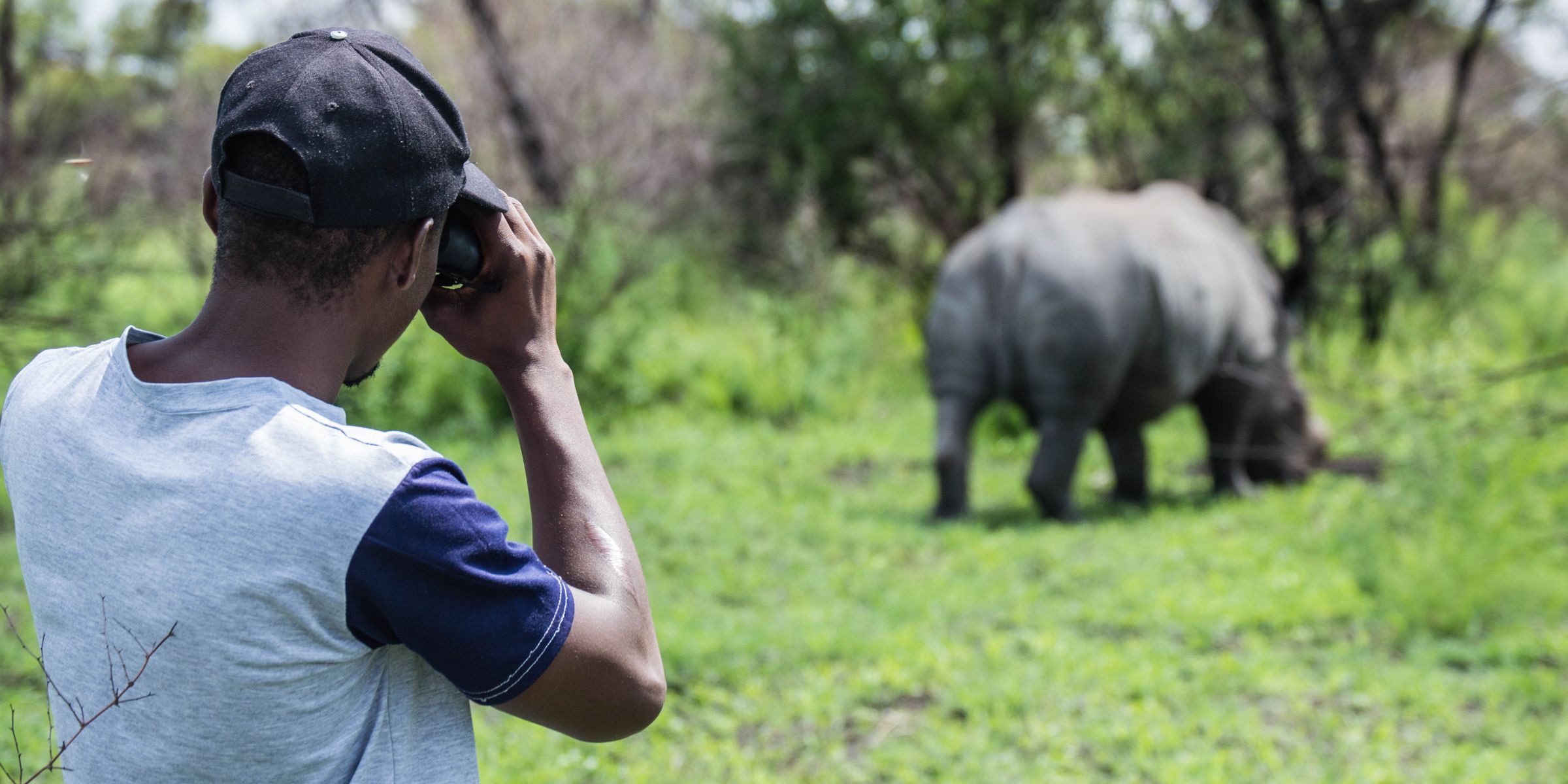
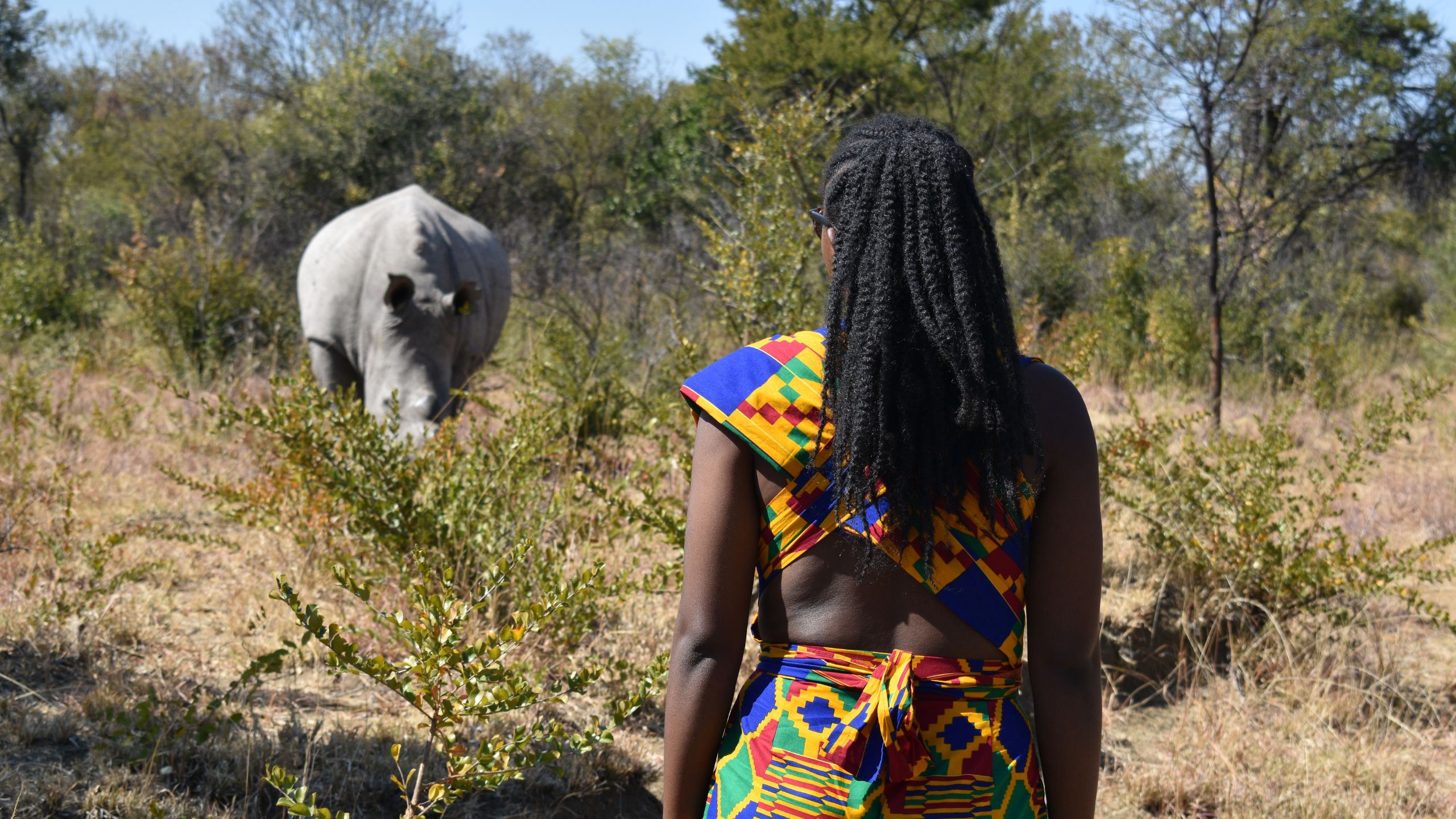
The signature encounter, and the reason most people come. Both species are here, though it's the white you meet, and both were brought in: white rhino from KwaZulu-Natal in the 1960s and black rhino from the Zambezi Valley in the 1990s.
They live in a defined and heavily patrolled part of the park, and you track them on foot. The full account of how that morning works is on its own page.
Leopard
This is good leopard country and there are leopard in it. Caves to den in, boulders to lie up on, and broken terrain that lets a cat move without being seen.
They aren't habituated. Nothing here is. Guides know the corridors along the cliff faces that the same animals use again and again, and a late afternoon in the dry season on high ground is the best chance you get.
Sightings aren't guaranteed and shouldn't be. A leopard that turns up on request is a leopard that's stopped being a leopard.

The plains game people underestimate
Boulder-and-acacia country doesn't look like classic game country. Guests say so on the drive in and stop saying it by the second outing.
- Sable. The one people photograph most. Black bulls, white face masks, horns that sweep back most of a metre. Rocky grassland is exactly their habitat.
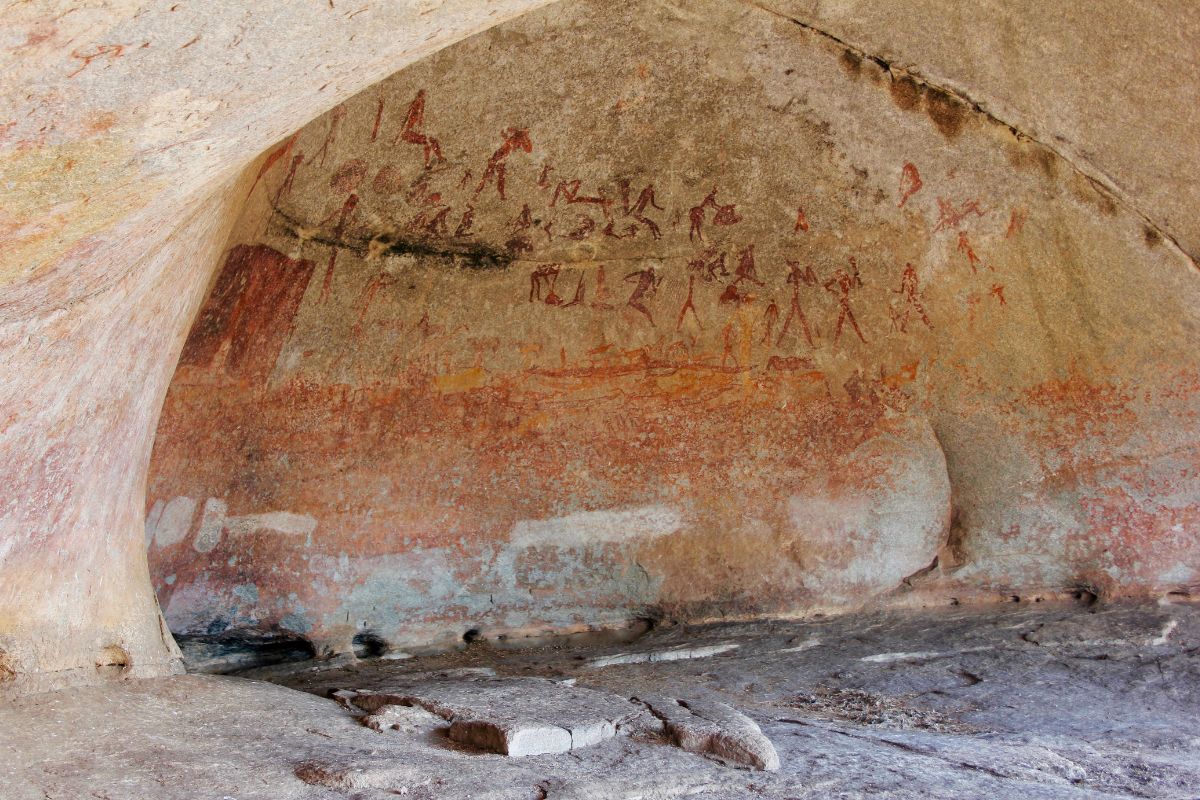
- Eland. Africa's largest antelope, and the animal the San painted more than any other in these hills. Seeing one here is not only a wildlife sighting.
- Giraffe. Browsing acacia with granite behind them, which isn't a combination you get anywhere else.
- Zebra and wildebeest. Mixed herds on the open grassland, concentrating near Maleme Dam as the dry season bites.
- Kudu, impala, warthog, duiker. Everywhere, and easy to stop noticing, which is a mistake.

The birds, beyond the eagles
Serious birders come here for the raptors, and they are right to. Beyond the Verreaux's there are black-chested snake eagles, African hawk-eagles, augur buzzards and a good run of migrants through the summer.
Away from the cliffs it is rollers, hornbills, bee-eaters, boubous in the thicket and waterbirds on the dams. The park list is long. I'd rather your guide showed you what's actually about on the day than have you arrive counting against a number.
When to come for what
- May to October
- Dry. Thin bush, short grass, long sight lines, and game concentrating at water. The classic window, and the best months for tracking on foot.
- August to October
- The hottest and the best for sheer volume at the dams. Also the end of the dry, so the bush is at its thinnest.
- November to April
- Green. Tall grass and thick bush make the tracking harder, but the light is better, the birding is at its peak with the migrants in, and the park is close to empty.
- April
- Impala lambing. Which brings everything that eats impala.
- June to September
- Verreaux's eagles on the nest ledges. The easiest time to watch a pair working a territory.
There's no closed season here. The animals are resident, the water is permanent, and the park doesn't empty out.