
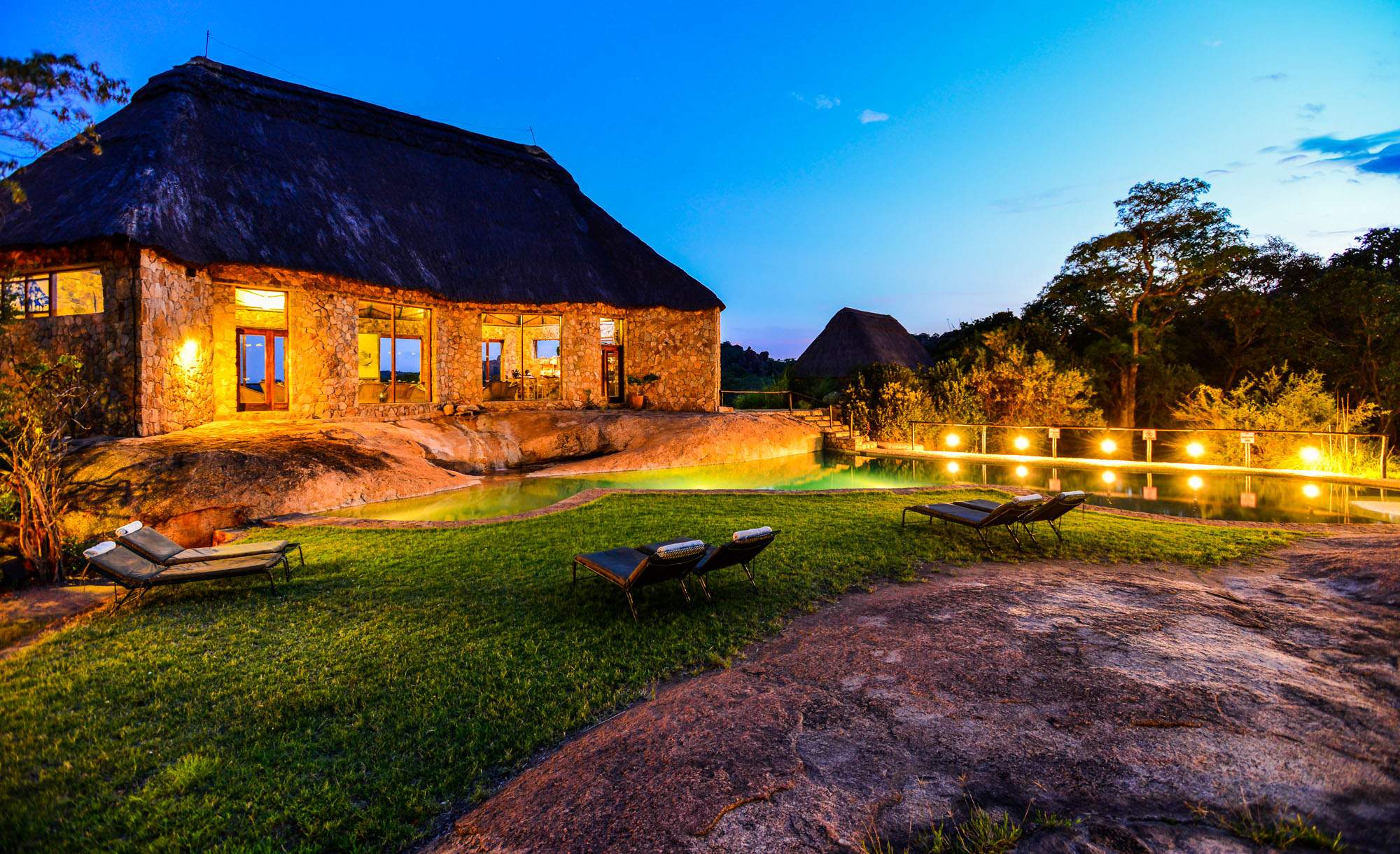
About the lodge
Opened by Alan Elliott in 1992. Rebuilt and run by his son Josh since 2012.
Ask about your dates
No payment, no account. We check the diary and reply within a few hours, always within 24.
Dates not fixed yet? Know your dates?
4.6 from 296 reviews on TripAdvisorNo payment at this stage. One email or message with the answer, nothing else.
 Tripadvisor Hall of Fame
4.6 / 5 from 296 Tripadvisor reviews
Inside the park boundary the only private lodge in Matobo National Park
Tripadvisor Hall of Fame
4.6 / 5 from 296 Tripadvisor reviews
Inside the park boundary the only private lodge in Matobo National Park
01 The founder
The man who named the Presidential Elephants.
Alan Elliott opened this lodge in 1992. He had already founded Touch the Wild and built a good deal of what the Zimbabwean safari industry now takes for granted, and it was Alan who gave the Presidential Elephants of Hwange their name, and with the name their protection.
He built here small, on foot, and inside the park, and he ran it himself. Those three decisions are still the entire brief.
By any honest measure, the father of safari in this country.

02 The hills
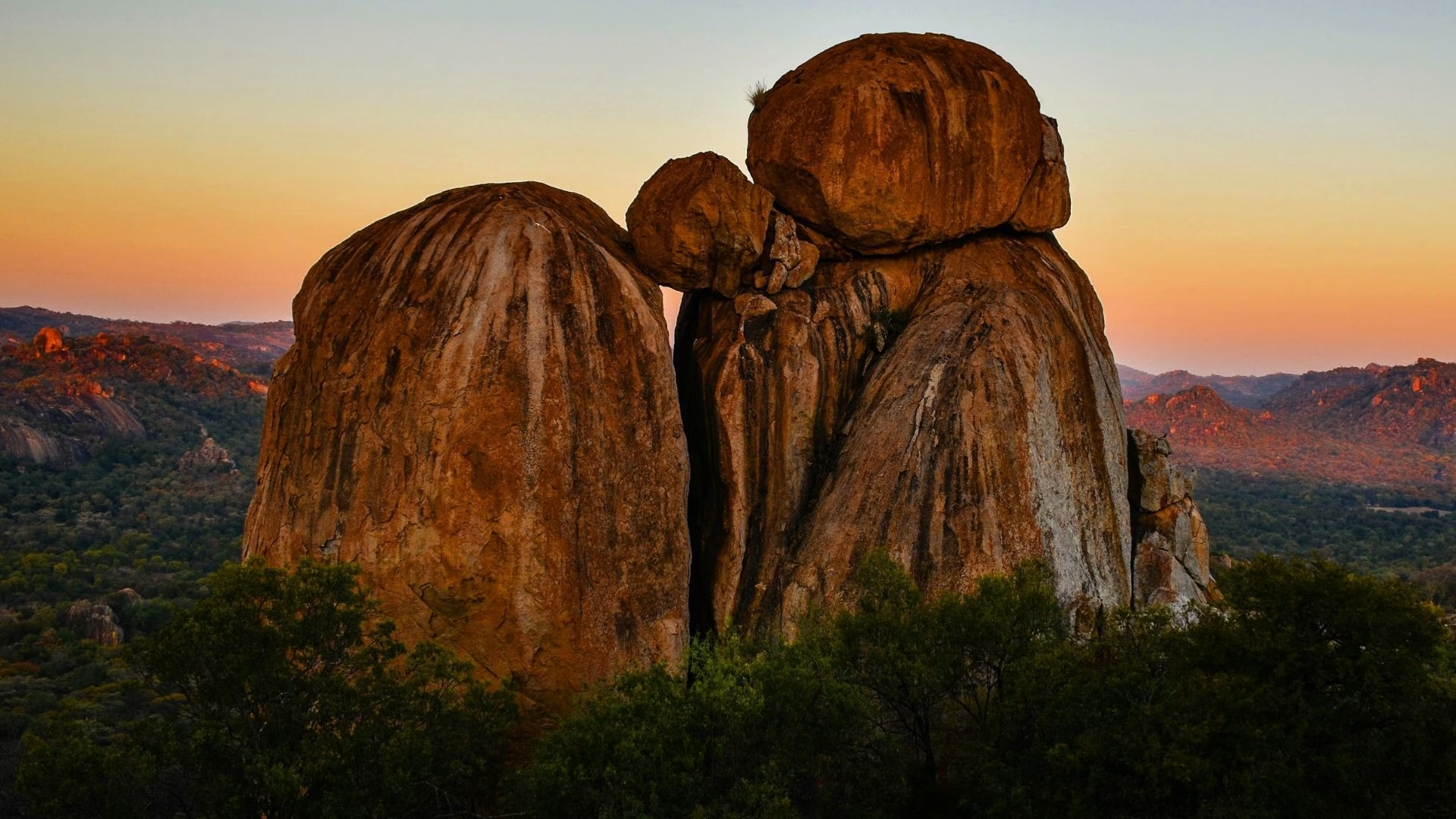
Granite that was old before anything was alive.
The Matobo Hills are Archaean granite, around 2.6 billion years of it, weathered into domes and balancing stacks and amphitheatres before life on earth had settled on a shape of its own.
UNESCO listed the range in 2003. The recognition was late. People have been leaving marks in these valleys for forty thousand years, and there are more than three thousand rock art sites among the kopjes.
The lodge sits inside the National Park boundary. It is the only one that does, which is why the bush starts at the verandah rather than an hour up the road.
03 The lodge now
Fifth generation in this country. Second in the Matobo.
The Elliotts have been in Zimbabwe since the 1860s. Alan sold the company in 1997. Josh took the lodge on in 2012, rebuilt it, and has run it since, through drought, through currency collapse, through everything in between. It is not leased, franchised, or handed to a group.
The day-to-day belongs to a long-serving team on site. Josh is not behind the bar, but he is in the training, the standards, and the reply to any letter that matters. Write to bookings@matoposhillslodge.com and a person answers.
Some of the job gets written down. Josh writes a column for Tourism Update and longer essays on LinkedIn, read by lodge owners, operators and agents across Southern Africa, the UK and Europe. The staffing calls, the pricing, what a bad season actually costs. Read them if you want to know who you would be staying with.
There are larger lodges in Zimbabwe, and there are louder ones. This one was built for travellers who notice the difference.

04 How it runs
What that means, in practice.
Six decisions that shape a stay here. None of them are new, and none of them are up for review.

05 The team
The people you will actually meet.
Most of what makes a stay here work is done by people who live in these hills and have worked at this lodge for years: the guides who read the ground, the kitchen, the housekeeping, the man behind the bar who will have your drink poured before you have crossed the room on the third evening.
It is a small operation and it runs on people rather than systems. That is the whole point of it.
06 Before you come
Things worth knowing.
Come and see it for yourself.
Tell us the dates you are considering and who is travelling, and the reply will come from the lodge within twenty-four hours.