
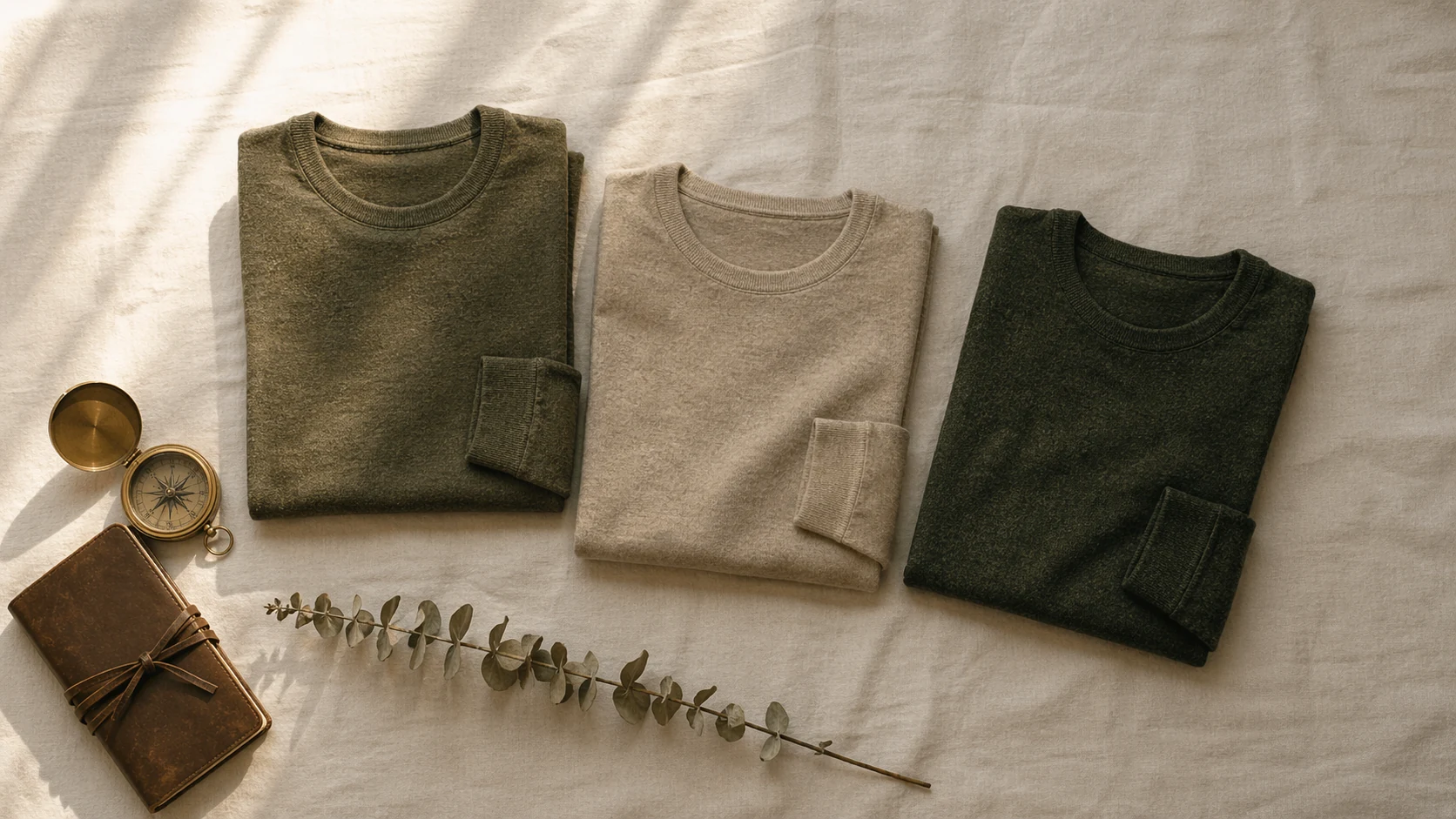
The Merino Wool Travel Clothing Guide
The single best fabric ever made for travel. GSM weights, brand-by-brand breakdown, safari-specific layering, and how to make a merino shirt last a decade.

Of every piece of travel clothing I own, one material earns its place in the bag every single time: merino wool. Not synthetic, not cotton, not hemp. Merino. For safari specifically, and for pretty much any trip that involves a flight longer than six hours, merino solves problems no other fabric solves.
The pitch is easy. Worn three days in a row without washing, a good merino shirt still doesn’t smell. Warm at 5am, cool at 10am. UPF 20–30+ without chemical treatment. Fire-resistant around the camp fire. Packs into nothing. Cut one merino long-sleeve from your packing list and you’re back to carrying three cotton shirts for the same job.
This guide exists because the industry has made merino unnecessarily confusing. Weights labelled inconsistently, brand positioning murky, the “superwash” versus untreated distinction buried. I wrote this to strip out the noise — specific products, specific weights, specific uses, and exactly what I personally pack.
The Three-Line Answer
150–190 GSM
The travel sweet spotLight enough for summer, warm enough to layer. 200 GSM wins for most winter mornings; 260 GSM is honestly fine in Zimbabwe winter and cool spring if you run a touch cold — I wear mine daily May–August and into September.
Three Shirts
Covers 7 daysOne 200 GSM long-sleeve, one 175 GSM everyday, one 150 GSM short-sleeve. Rotate, rinse, repeat. The system that makes a 35L bag work.
Icebreaker or Smartwool
Default brandsEither works. Icebreaker has the broader range and better palette; Smartwool has a softer hand. Unbound is the minimalist alternative.
Why Merino — the Five-Minute Case
Merino comes from a specific breed of sheep (the Merino, originally Spanish, now farmed largely in New Zealand and Australia). The fibre is much finer than regular wool — typically 17–20 microns, compared to 30+ microns for coarse wool. Sub-19-micron merino is what makes the difference between “itchy” and “softer than cotton” against the skin.
One good merino long-sleeve replaces three cotton shirts and doesn’t smell after three days in a row.
There are six reasons it wins on travel.
1. It does not smell
Merino’s keratin structure traps odour-causing bacteria inside the fibre, where they can’t reproduce. Worn three days running, a merino shirt genuinely does not smell. Worn five days, it smells mild. Cotton crosses into “wash now” at around 12 hours of wear in African heat. This alone justifies the price difference on a trip where same-day laundry isn’t always available.
2. It regulates temperature
Merino’s natural crimp creates air pockets in the fabric, which is why the same shirt keeps you warm at 5 °C and cool at 25 °C. This is why it works on a game drive — you leave the lodge in the cold and you’re in the heat within two hours. Merino adapts; cotton and synthetic don’t.
3. UPF 20–30+ without chemicals
Wool fibres block UV naturally. A long-sleeve merino tee gives UPF 20–30 without the permethrin coatings that eventually wash out of synthetic sun shirts.
4. It’s fire-resistant
Merino won’t melt. A spark from the boma fire burns a small hole rather than turning a polyester shirt into a plastic blob stuck to your skin. If you’ve ever sat next to a fire in a fleece, you know this distinction is real.
5. It’s warm when wet
Because merino fibres insulate even soaked, it doesn’t turn cold like cotton the moment you sweat or get caught in rain. This is why mountaineers have worn merino base layers for a hundred years.
6. It packs into nothing
Merino compresses to a fraction of the pack volume of cotton. On a 15 kg bush-flight limit and a 35L carry-on, this directly saves you capacity for the things you can’t go without.
Merino is slower to dry than polyester once thoroughly soaked. A fully wet merino shirt takes 4–8 hours to dry; a polyester shirt takes 1–2. Workaround: pack two merino shirts, rotate, rinse the second while wearing the first.

The Numbers
GSM Weights, Decoded
Merino shirts are sold by weight, measured in GSM (grams per square metre). This is the number that tells you what a shirt actually does. Brand marketing treats it as a technical afterthought; it’s the most important spec on the tag.
Cool-Lite blends. Too light for most travel. Runs hot in summer without giving you the merino “feel”. Skip.
Oct–Feb short-sleeve. Looser everyday cut. Icebreaker Tech Lite sits here.
If you only buy one shirt, this. Year-round, base layer or standalone. Icebreaker Everyday.
Winter base layer. May–Aug dawn drives. Under a fleece at 5am. Icebreaker 200 Oasis.
I wear mine daily May–Aug. Warm enough at 5am, fine under a light shell at 11am, comfortable into cool spring. Only skip in summer.
Mountain base layer for alpine. Not for safari.
Pack Hacker’s merino travel guide calls 150–190 GSM the travel sweet spot — which matches recommending the 175 for most people and the 200 for winter-morning specialists.

Icebreaker — the Full Line-Up Decoded
Icebreaker makes the most confusing product catalogue in merino. Here’s what the names actually mean for travel:
| Line | GSM | Cut | Best for |
|---|---|---|---|
| Cool-Lite Sphere | ~125 | Slim base | Summer running. Not for safari. |
| Tech Lite III | 150 | Relaxed everyday | Hot-season travel t-shirt. |
| Everyday | 175 | Regular | Year-round. The “if you only buy one” shirt. |
| 200 Oasis | 200 | Slim base-layer | Cold-morning base layer. |
| 260 Tech | 260 | Slim base-layer | Daily winter wear in Zim. My actual workhorse May–Aug. |
| 320 RealFleece | 320 | Regular | Heavy midlayer. Too much for safari. |
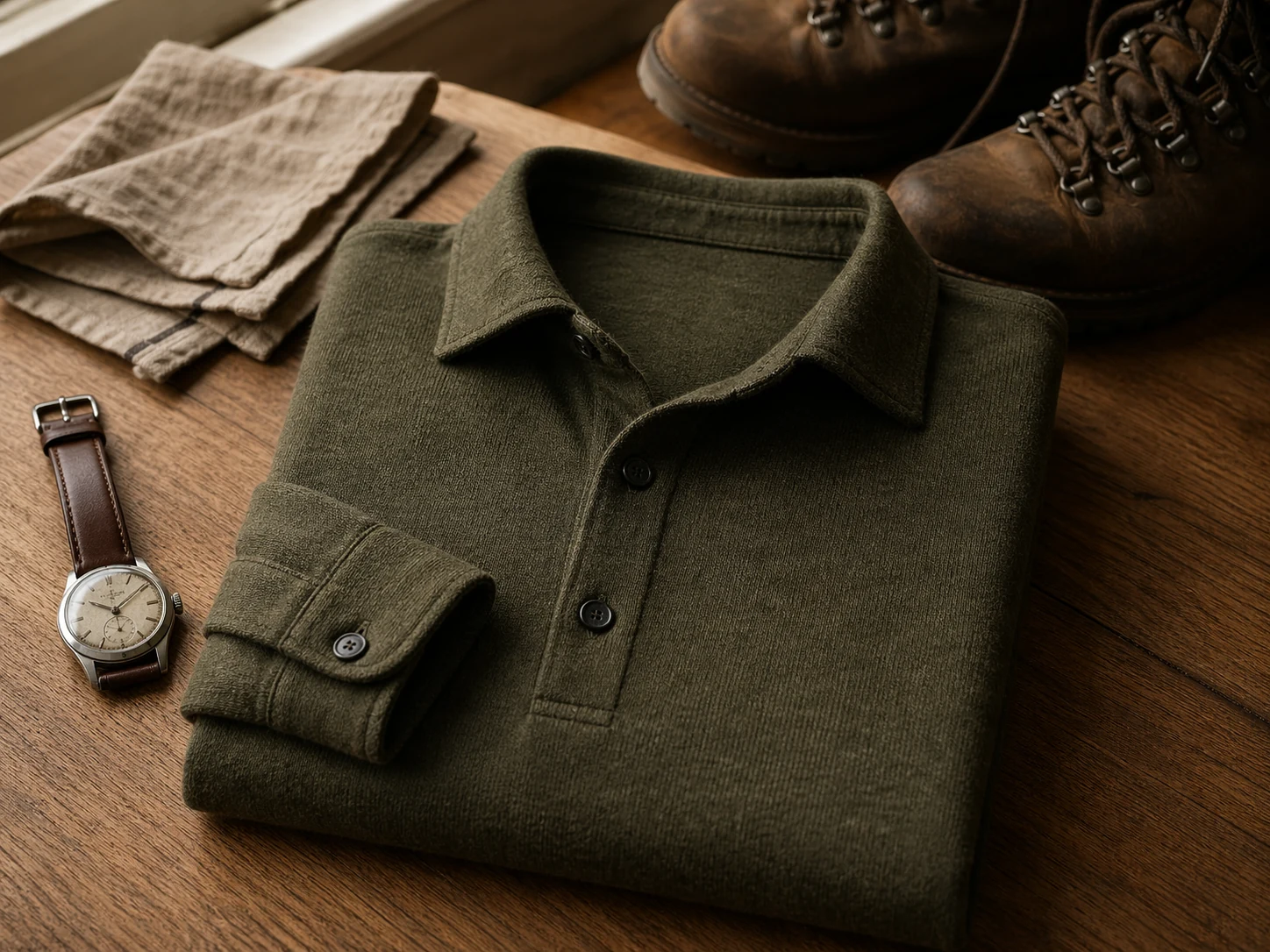
The Three I Actually Recommend
Icebreaker 200 Oasis Long Sleeve Crewe
The winter-morning base layer. 200 GSM is warm enough under a fleece at 5 °C but not overheating by 8 °C when the sun clears the Matobo hills. Loden, Otter and Athol Heather colourways all sit in earth-tone palette. Slim base-layer cut — sized to go under a shirt, not over. Icebreaker’s strongest lineage piece and the one I pack in May, June, July and August without exception. If you buy one winter merino, this is it.
Icebreaker 175 Everyday Long Sleeve Crewe
The “if you only buy one” pick. 175 GSM is light enough to wear in shoulder season without cooking and heavy enough to layer under a fleece. Regular cut, not slim base-layer — wears fine as a standalone shirt. The single most versatile merino piece Icebreaker makes.
Icebreaker 150 Tech Lite III Short Sleeve
The hot-season alternative. 150 GSM, looser everyday cut, wears like a normal t-shirt. The merino answer to the Arc’teryx Cormac Crew — slower to dry, better for odour, more forgiving across a 3-day camp-to-camp transfer. Pack one even in summer.
Icebreaker 260 Tech Long Sleeve Crewe
The one I actually wear most in a Zimbabwe winter. Warm enough to skip the fleece on some mornings, fine under a light shell at 11am, comfortable into cool spring — I’ve worn it to the office in September with no regrets. Most guides online tell you 260 is “too warm for Africa” because they haven’t tried it on a 5 °C morning in the Matobo hills when the Land Cruiser is doing 40 km/h. It isn’t. If you run a touch cold, this is the shirt. Only swap back to the 200 Oasis in genuine heat.
Smartwool — the American Alternative
Smartwool is Icebreaker’s closest competitor. Slightly more athletic fit, slightly softer hand, more available in US outdoor retailers, and the colour palette leans outdoorsy rather than fashion-forward. On safari, the two brands are roughly interchangeable — which you pick comes down to fit preference and what’s in stock.
Smartwool Merino 150 Long Sleeve Crew
A core-spun construction — nylon inside, merino wrapped around it — which makes it markedly more durable than pure-merino Icebreaker at the same weight. Loses about 5% of merino benefit, gains about 50% of lifespan. A fair trade if you wear merino hard.
Smartwool Classic Thermal Merino Base Layer Crew
Heavier than the Icebreaker 200 Oasis. Better for colder conditions — if you’re combining safari with Drakensberg or a winter visit to the Cape, this adds useful range.

Smaller Brands Worth Knowing
Unbound Merino Crew Neck
Direct-to-consumer pricing, no logos, no shoulder seams. I put my first Unbound on in 2019 and it’s still in rotation. Extremely plain. If Icebreaker’s exterior branding bothers you, this is your brand. Colours are limited to true neutrals (stone, black, navy, charcoal, sage) which ironically makes it better for safari than Icebreaker’s wider palette.
Outlier Runweight Merino T
The cult pick. Extremely refined cut, Cordura-reinforced shoulders on some variants, pattern-matched seams. More expensive than Icebreaker. Worth the premium if fit matters more than logic. Urban-leaning palette so check the colourway before buying.
Minus33 Woolverino Long Sleeve Crew
Honest value merino. Slightly chunkier knit than Icebreaker, slightly less refined, but the pricing makes the maths very different. Three Woolverinos cost the same as two Oasis 200s and you cover more days.
Wool & Prince
Button-downs and polos in merino blends. The pick if you need a presentable shirt for a business meeting and then a walking safari in the same week.
Safari Layering — the Actual System
A game drive is a moving target for temperature. You leave at 5am in a beanie and a puffy and by 9am you’re in short sleeves with the puffy compressed into a daypack. Merino’s layering system for a winter safari morning looks like this:
A Winter Morning in Matobo
Rotation Strategy
For a 7-day safari, my actual clothing kit is three merino shirts rotated:
- One 200 GSM long-sleeve (Oasis or equivalent) — base layer for cold mornings, standalone for mild conditions
- One 175 GSM long-sleeve (Everyday or Unbound) — daily-wear, dinner, transfers
- One 150 GSM short-sleeve (Tech Lite or Runweight) — afternoon, hot midday, sleep
This covers 7 days with one rinse mid-trip. It’s also — and this matters for a 35L bag — under 600 g total. The same coverage in cotton is 5 shirts and around 1.5 kg.
Care & Washing — Make a Shirt Last a Decade
A well-cared-for merino shirt lasts 8–10 years. A poorly cared-for one pills in a month and develops holes in six. The difference is mostly what you do on laundry day, not what you pay up front.
Washing
- Cold water only. 30 °C or below. Hot water felts merino.
- Delicate cycle, wool setting if available. Front-loading machines are gentler than top-loaders.
- Mesh laundry bag to prevent abrasion against zips.
- Wool-specific detergent (Eucalan, Kookaburra, Nikwax Wool Wash). Enzyme-based regular detergents break down keratin over time.
- No fabric softener. Coats the fibre and kills the anti-odour property. This is the single biggest cause of “my merino suddenly smells” problems.
- No bleach. Chlorine destroys wool.
Drying
- Air dry flat. Hanging wet merino stretches the shoulders out.
- No dryer. Ever. Heat shrinks wool aggressively — you can lose two sizes in one cycle.
- Away from direct sun — UV fades the colour and degrades the fibre over years.

On the Road
On safari, sink rinsing is the standard approach:
- Fill sink with cold water and one Tru Earth detergent sheet (or a drop of wool-safe travel soap)
- Submerge the shirt, agitate for 30 seconds, leave for 10 minutes
- Rinse twice with clean water
- Roll in a quick-dry towel to squeeze water out — don’t wring, it stretches the fabric
- Lay flat on a dry towel or drape over a shower rail for 4–8 hours
Same-day laundry at Matobo Hills Lodge is complimentary and staff know how to wash merino correctly. Hand your shirts in at 7am and they come back by 5pm. The sink rinse is for transfer days, camping, or anywhere laundry isn’t available.
Myths and Downsides
“Merino is itchy”
Not true of good merino. 17–19 micron merino is softer than cotton against the skin. The confusion comes from cheaper “merino blends” with coarser fibre, or genuine wool mislabelled as merino. If you’ve been burned by itchy wool, try an Icebreaker 200 Oasis specifically — it’s the softest piece Icebreaker makes.
“Merino is fragile”
Half-true. Pure-merino lightweight pieces (150 GSM) can develop small holes under backpack-strap abrasion after 2–3 years of heavy use. Core-spun merino (87% merino / 13% nylon — Smartwool, Unbound, Minus33) is as durable as synthetic. If durability matters to you, buy core-spun.
“Merino is unsustainable”
Partly true, partly overblown. Merino sheep require land, water, and are methane-producing ruminants. On the other side: merino lasts 3–5x longer than the synthetic equivalent, which reduces total material throughput. Brands like Icebreaker publish detailed transparency reports (look for ZQ-certified labels, which guarantee land care, traceability and animal welfare).
“Merino is expensive”
True up front. False over time. A USD 100 merino long-sleeve that replaces three USD 25 cotton shirts and lasts 8 years is cheaper per wear than the cotton. Math out.
“Merino doesn’t work in the heat”
False, once you pick the right weight. 150 GSM in Zimbabwe summer (Dec–Feb at 35 °C) works better than cotton. The confusion comes from people trying 260 GSM in heat, which will obviously cook you.
My Actual Merino Kit
For transparency, here’s what I personally own and pack, what I paid, and how long it’s lasted:
- Icebreaker 200 Oasis LS Crewe in Loden — bought 2020, USD 110, still going. Winter every year.
- Icebreaker 200 Oasis LS Crewe in Otter — bought 2022, USD 115, still going. Rotation partner.
- Unbound Merino Crew Neck in Stone — bought 2019, USD 80, small hole from a backpack strap in 2024 (resewn). My most-worn merino piece.
- Icebreaker 150 Tech Lite SS in Sage — bought 2023, USD 80, nothing wrong with it.
- Icebreaker 260 Tech LS Crewe in Loden — bought 2021, USD 130, my daily May–August. Worn hundreds of times, still looks new.
- Smartwool Merino 150 LS in Dusty Sage — bought 2024, USD 90, only one season so far — too early to judge longevity.
- Icebreaker 175 Tech 2 Leggings — bought 2021, USD 140. Sleep layer in winter, base layer under trousers at 5am in July.
Total kit: 7 pieces, roughly USD 730 spent over 7 years. Replaced zero of them on durability grounds. Cost per wear is laughably low at this point.
The Zimbabwe Safari Packing List
Bags (35L carry-on), clothing, tech, cameras, binoculars — the full kit guide from Matobo Hills Lodge. Merino is what makes the 35L rule work; this is everything else.
Frequently Asked Questions
Icebreaker 175 Everyday Long Sleeve Crewe. 175 GSM is the sweet spot, regular cut wears as a standalone shirt or a base layer, year-round usable. About USD 100. If you hate it, you’ve lost a little money. If you love it, you’ve found the one piece of clothing you never travel without.
Even for a single trip, yes. The difference on a game drive — not smelling, not overheating, not being cold — justifies the cost for one use, and then you’ll own the shirt. I’ve never met someone who bought their first merino shirt for a specific trip and didn’t keep wearing it for years afterwards.
Yes, at the right weight. 150 GSM in short sleeve is fine at 35°C; 200 GSM long sleeve is too warm above 28°C or so; 260 GSM is strictly winter and cool spring. The Icebreaker Tech Lite III 150 SS is the hot-weather pick.
For base-layer warmth and odour, pure merino is slightly better. For durability, core-spun blends (87% merino + 13% nylon) win. My preference: pure merino for the “best shirt” (winter base layer, dinner), blend for “work shirt” (backpack strap, daily abuse).
Every 4–8 wears, not every wear. Merino doesn’t need washing on the cotton schedule. Washing accelerates fibre wear. Air out overnight between wears — 8 hours on a hanger in a ventilated room resets most of the odour.
Synthetic wins on pure moisture management and drying speed. Merino wins on odour, comfort range, and feel. For heavy-sweat activities (trail running, hiking 20+ km days), synthetic is usually better. For travel, where you sweat moderately but live in the shirt for 14 hours a day, merino wins.
Genuinely transformative. Icebreaker Anatomica and Smartwool Merino 150 briefs are the two standards. USD 30–40 per pair. Worth it. Pack 4 for a week and rotate.


