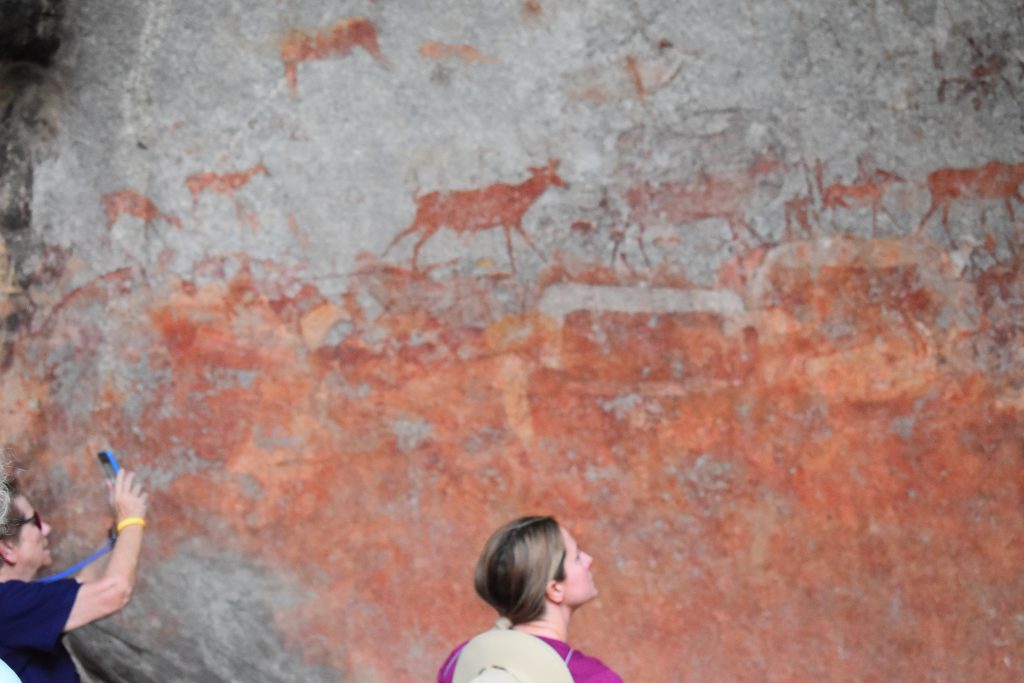
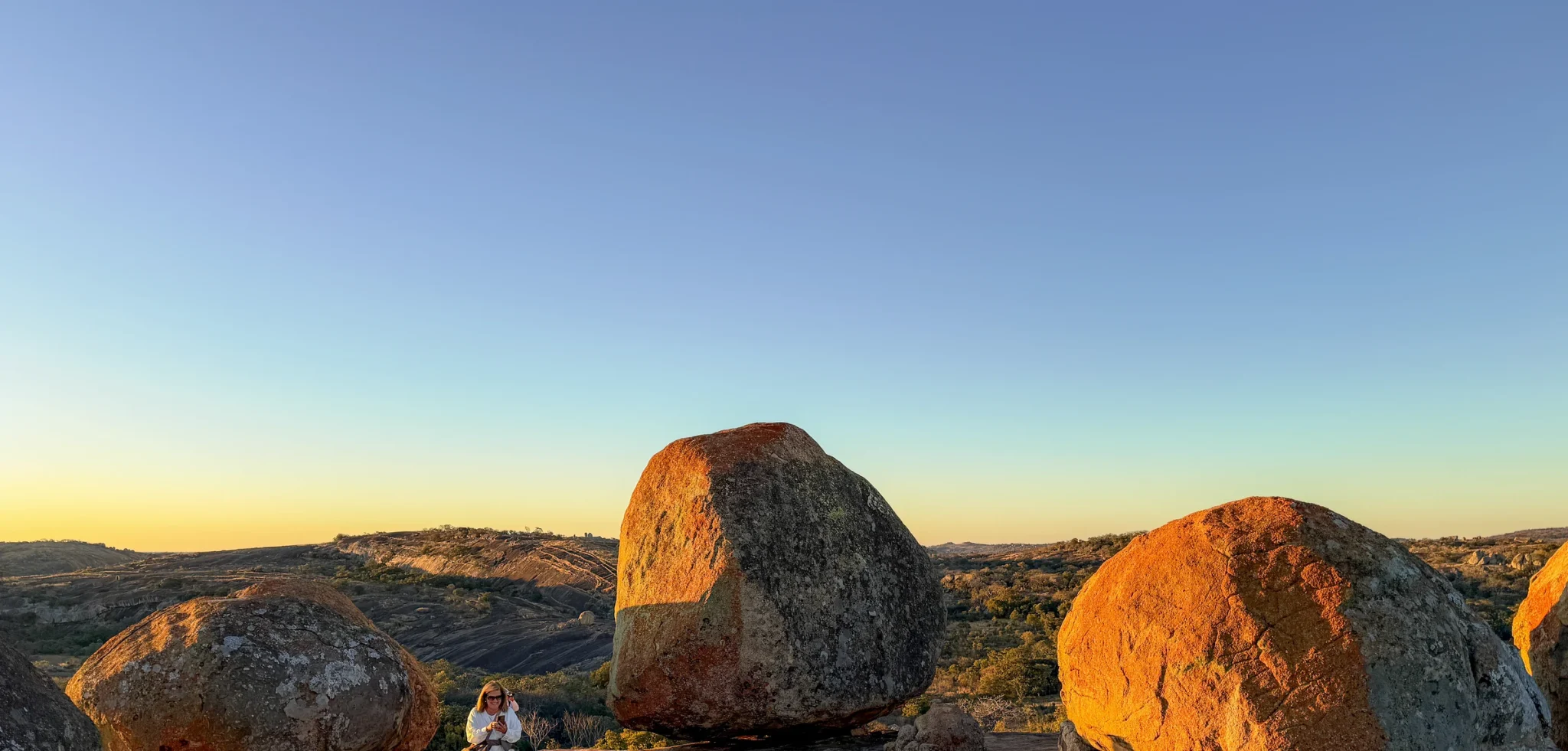
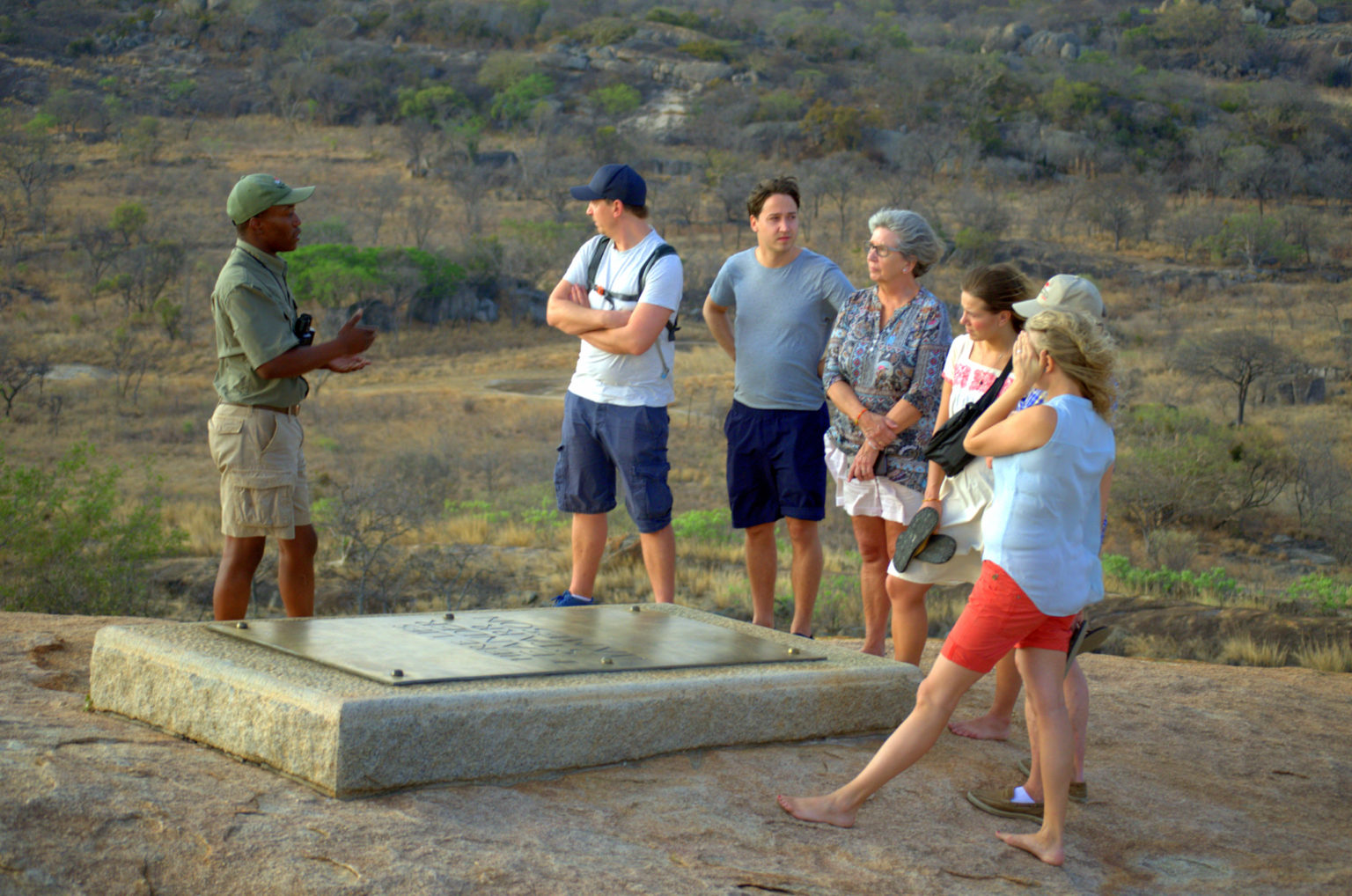
At the top of the dome there is a slab of polished granite set flat into the rock, a bronze plaque, and a low iron chain around it. Seven words: Here lie the remains of Cecil John Rhodes.
That's the entire monument. Everything else about the place is commentary, including this.
What the hill is
The summit sits at about 1,460 metres, near the northern edge of the hills. The granite under it is 2.6 billion years old, pushed up as one molten mass, cooled slowly underground, and then exposed as everything softer around it wore away.
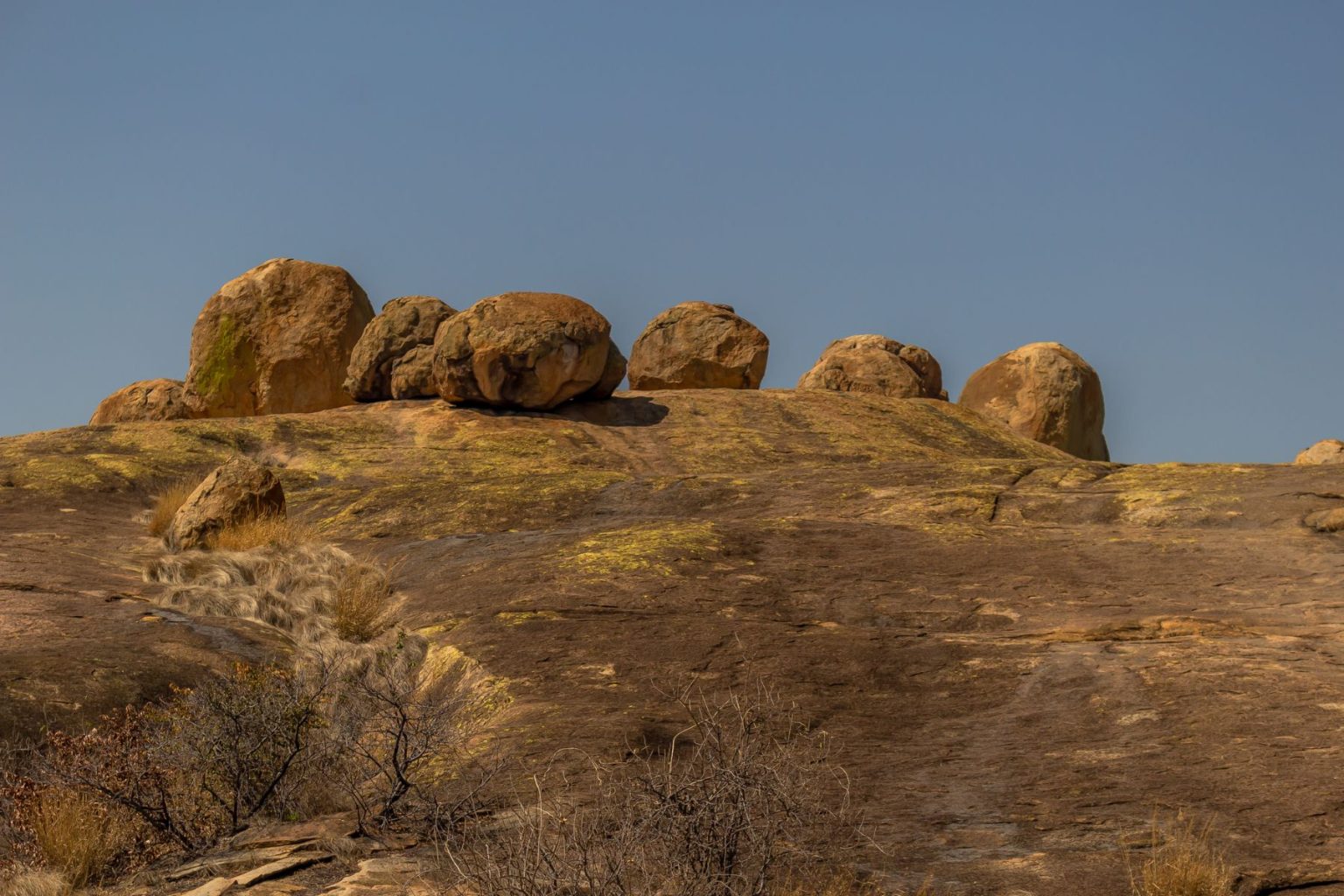
What's left are the smooth sheet-like domes geologists call exfoliation domes and everybody else calls whalebacks. They are the signature landform of the Matobo, and together with the rock art they are why the hills were inscribed by UNESCO in 2003.
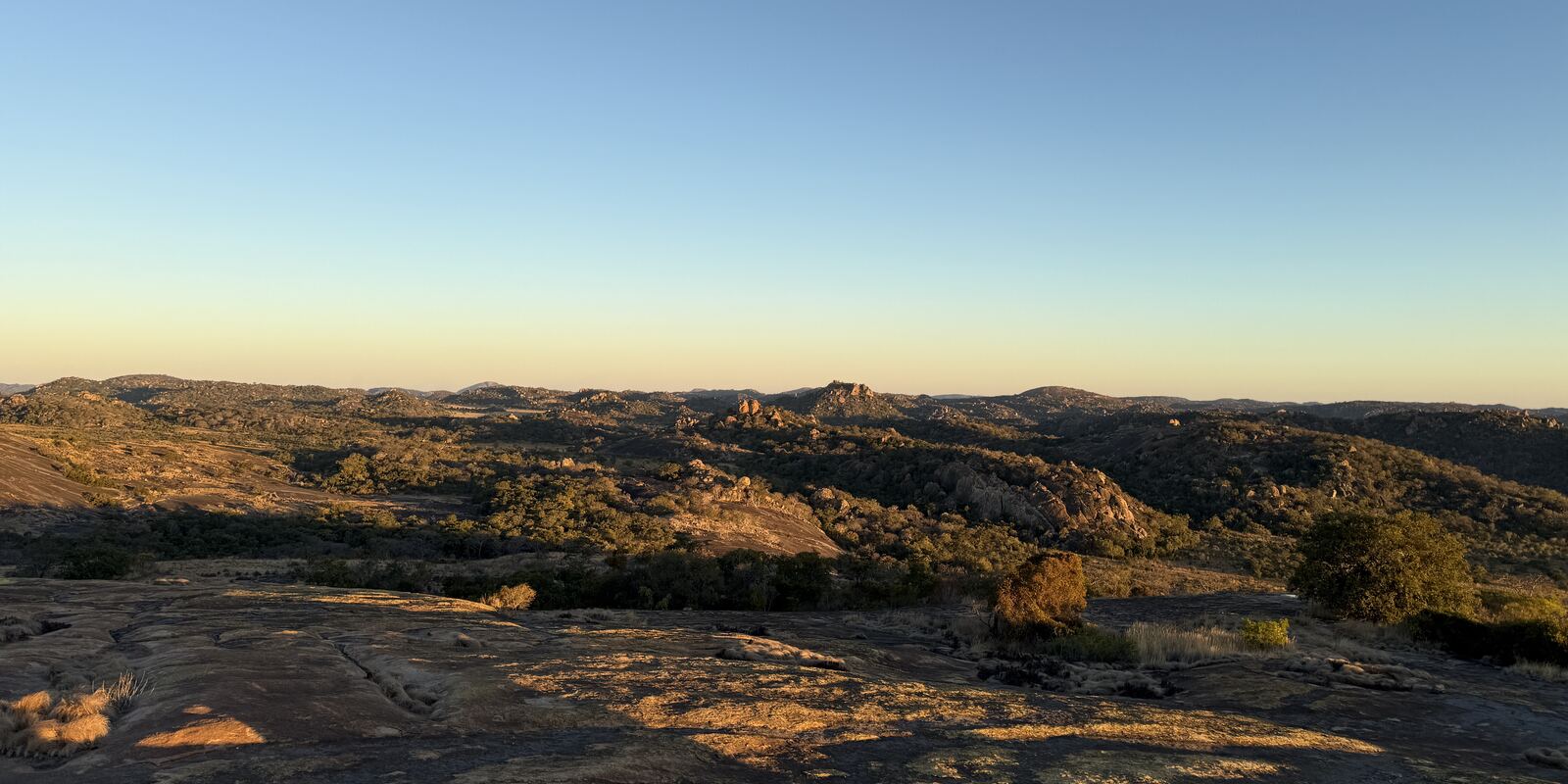
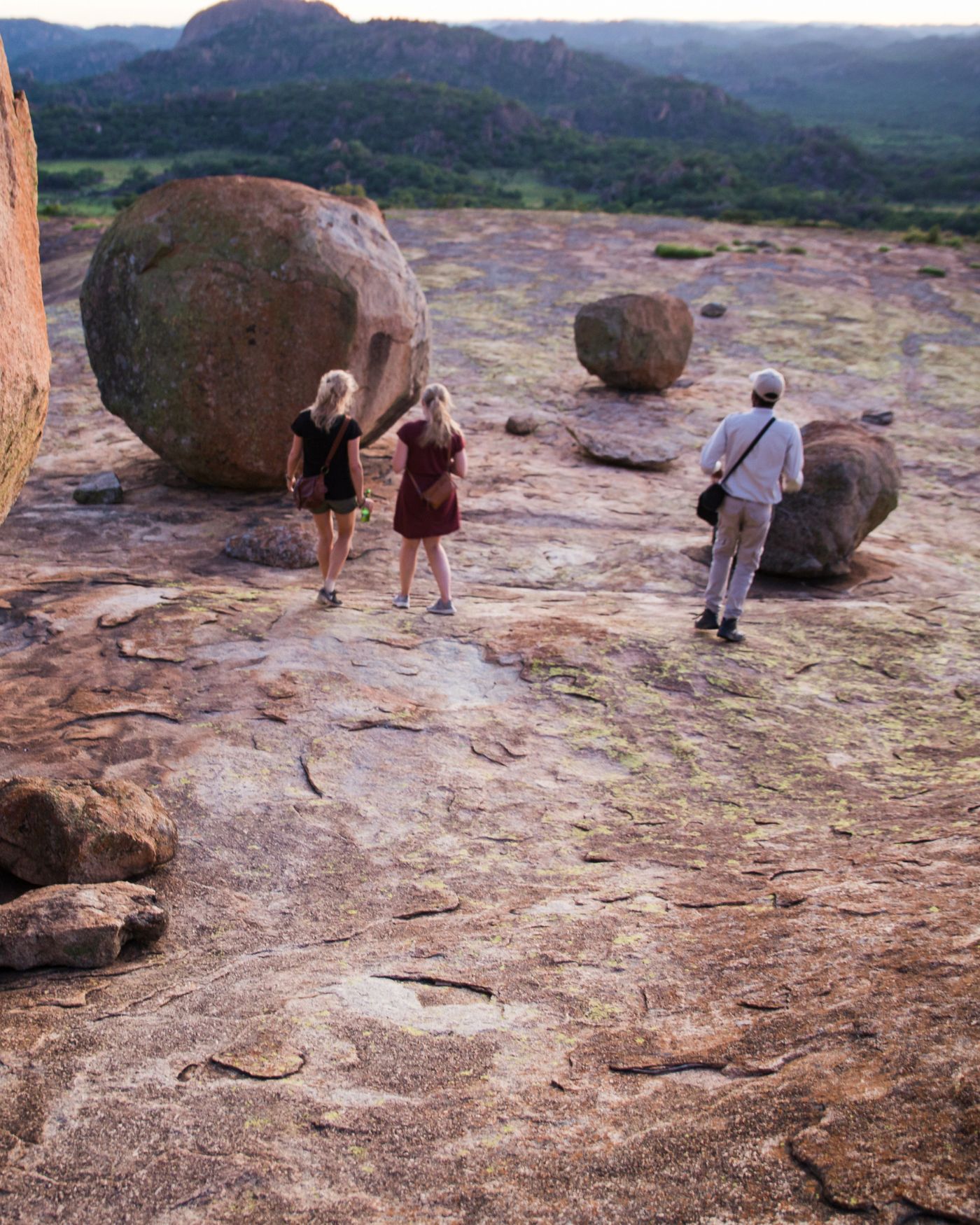
The view is not dramatic the way a mountain is dramatic. It is unusually calm. Nothing spikes. The domes rise and fall and the eye reads the horizon as a slow horizontal rhythm that carries sixty or seventy kilometres on a clear day. Rhodes is said to have called it a view of the world, and the English name stuck.
The name it had first
Malindidzimu. Usually translated as the place of benevolent spirits: where the ancestors gather, and where the living come to ask for help.
It's been sacred a great deal longer than anything currently standing on it. Mzilikazi, the first Ndebele king, was buried in these hills at Entumbane in 1868, thirty-four years before Rhodes arrived on the summit. The Mwari oracle whose shrines are scattered through the Matobo is older than that again.

What else is up there
Two more graves sit beside the slab. Leander Starr Jameson, Rhodes' lifelong friend and the architect of the 1895 raid that carries his name. And Sir Charles Coghlan, the first premier of Southern Rhodesia. All three were put on the summit deliberately.
A short walk east along a broad granite shelf is the Shangani Memorial, unveiled in 1904. It is a small stone structure carrying a bronze frieze by the sculptor John Tweed. It commemorates the thirty-four men of the Wilson Patrol, surrounded and killed by an Ndebele impi at the Shangani River in December 1893, during the First Matabele War.
Most of them were buried where they fell and moved here later. Two of the men named on the memorial were never found.
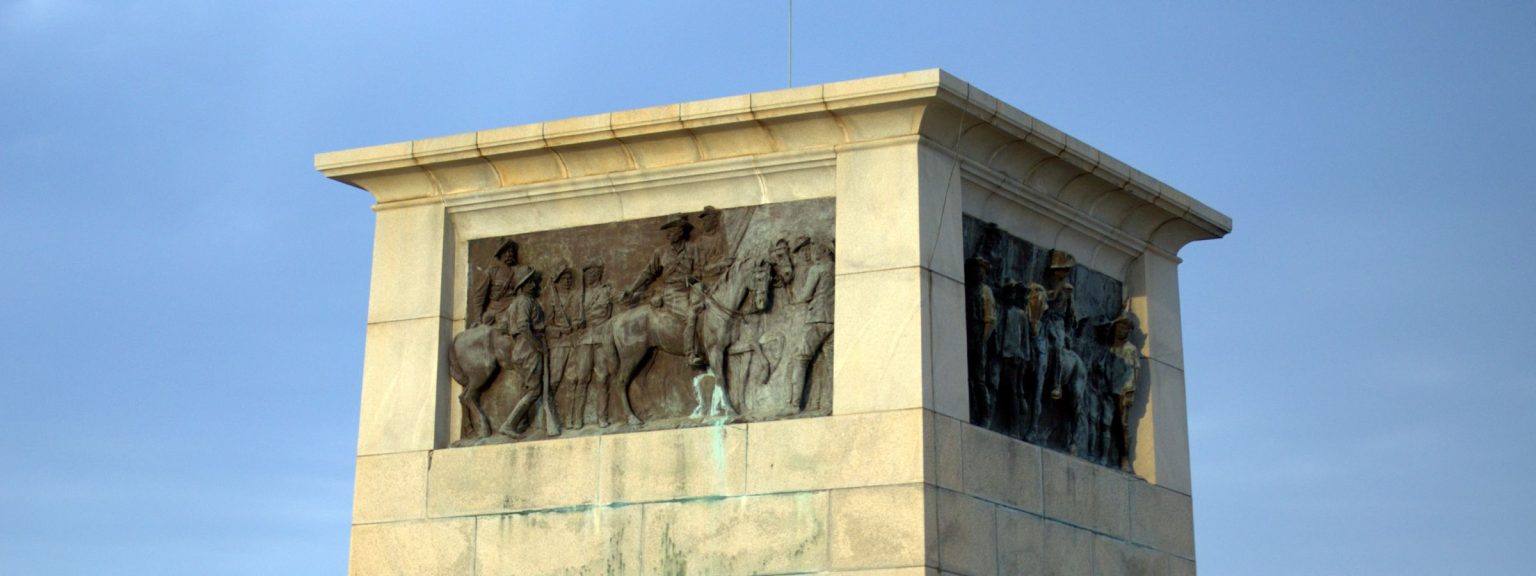
The weight of it
People arrive expecting to have a feeling about Rhodes and mostly end up having one about the rock instead.
The argument over the grave is real and it isn't settled. There have been calls to move him. There are Zimbabweans for whom the burial is a standing insult, and there are Zimbabweans who point out that the Ndebele in the valley below gave him the Royal Salute as the coffin went down, by their own protocol and unprompted, which is not a thing anybody made them do.
Both of those are load-bearing. The hill holds them at the same time and asks you to look at them rather than past them.

Getting up there
From the lodge it is a short drive to the park gate and then about twenty-five minutes on well-signed park road to the World's View car park. From the car park it is a fifteen to twenty minute walk up a staircase cut into the granite. It's steep in places and entirely manageable.
Bulawayo is roughly 45 km north of the summit, which is nearer than the lodge, so allow forty-five to sixty minutes if you're coming straight from the city.
Map loading…
Open in Google Maps
Directions in Google MapsApple Maps20°29′33″S 28°29′25″E
What it costs
Two fees, both set by Zimbabwe Parks and both usually wanted in cash.
- Park entry
- US$18 per international adult per day, US$9 for children 6 to 12. SADC US$14 and US$7. Zimbabwean residents US$4 and US$2.
- Rhodes' Grave
- A separate National Monument entry of US$10 per international adult and US$5 per child. Zimbabwean residents pay US$4 and US$2.
- Vehicle
- US$12 for a foreign light vehicle at the park gate, US$5 for a local one.
- Included?
- Park fees come with the Matobo Experience and All-Inclusive plans and with our day tours. The monument fee is separate. Bring cash for the gate.
Going at the right hour
Early morning or late afternoon, and it isn't about crowds. Midday flattens the granite and bleaches the whole view out. Early and late, the light comes in low and the domes go the colour of the picture at the top of this page.

The summit is exposed and the wind is a factor. A still morning up there is a gift and you'll know it when you get one.
- Shoes
- Something with grip. The granite's slick when damp and the staircase is steep in the middle section.
- A jersey
- The summit's colder than the car park and windier than it looks from below.
- Water and a hat
- There's no shade at all on the dome.
- Time
- Two to three hours for the visit, and an hour up there if you can spare it. The place doesn't reward rushing.